
ADA Restroom Rental: What Every Event Planner Should Know
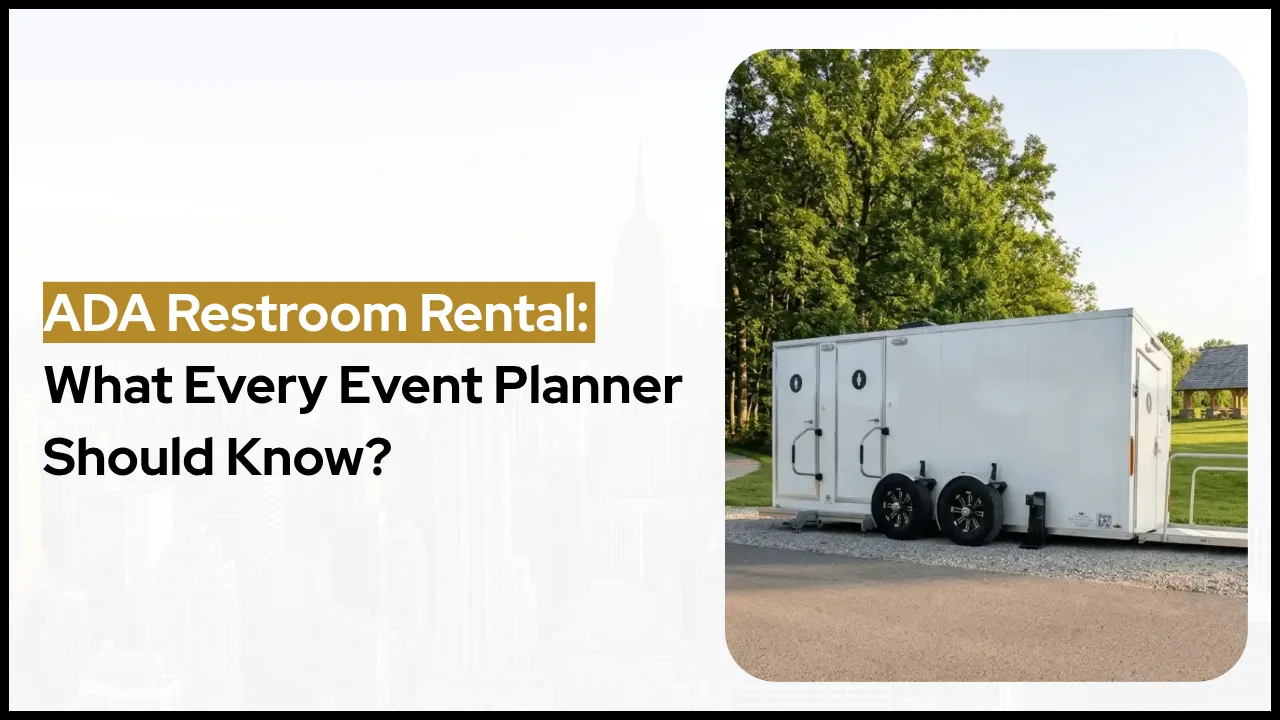
An ADA restroom rental gives guests with disabilities a restroom option that is easier to enter, move around in, and use with dignity. For outdoor weddings, festivals, and temporary venues, access depends on the route, placement, layout, and service plan, not just a wheelchair symbol.
What makes a restroom ADA accessible?
An accessible unit is designed around usable space and safe movement. An ADA compliant toilet rental should have the required door clearance, turning space, grab bars, toilet positioning, and other features in applicable standards.
An ADA compliant toilet rental may look spacious in a product photo yet be awkward to navigate in person. Ask for specifications and entrance and interior photos, and confirm that the model and its installation meet applicable ADA requirements.
A properly selected ADA compliant trailer may offer more room than a standard portable unit. But “trailer” does not automatically mean accessible: the entrance route, ramp or landing, door clearance, and interior all matter.
How many accessible units should you arrange?
For portable toilet clusters covered by the 2010 ADA Standards, the applicable requirements include providing accessible units based on the number of units in the cluster, with at least one accessible unit where required. Use the U.S. Access Board guidance as a starting point, then confirm any additional requirements with the venue or local authority before finalizing the order.
Treat this as a baseline, not a complete capacity plan. Long or busy events may need more units, and local codes or venue rules may add requirements. Check before finalizing the order.
Placement matters too. If units are spread across the main stage, food area, and entrance, one accessible unit by the gate may not serve everyone. Plan access for each cluster and label accessible units when needed.
Which restroom option fits your event?
Choose the restroom setup based on the site, event length, expected demand, accessibility needs, and available space. A single accessible portable unit may work for a smaller outdoor gathering, while an accessible restroom trailer may provide more interior space and comfort for weddings, corporate events, or longer events.
|
Option
|
Often suits
|
What to confirm
|
|---|---|---|
|
Accessible portable unit
|
Street fairs, parks, outdoor ceremonies
|
Level approach, interior clearance, stable placement
|
|
ADA compliant trailer
|
Corporate events, weddings, extended events
|
Ramp and landing, door clearance, accessible interior layout
|
|
Combined restroom and shower setup
|
Camps, sports events, multi-day productions
|
Separate bathing needs, water supply, drainage and privacy
|
|
Several units across the site
|
Festivals and large public gatherings
|
Accessible route to every cluster and clear signs
|
For an ADA restroom rental, compare floor plans rather than judging a trailer by its exterior size. Ask whether an ADA trailer can reach the site through available gates. Ask whether the ramp is included, who positions it, and who checks the installation.
On a tight or uneven site, portable ADA restroom trailers need planning before delivery. Measure paths, slopes, gates, turning areas, and nearby equipment; discuss the site, not only the catalogue.
What should you check before booking?
For an ADA compliant toilet rental, ask for details you can verify. An ADA accessible restroom trailer should not be chosen by name alone; request specifications for the door, turning space, grab bars, toilet clearances, and entrance. Confirm who handles the ramp, landing, signs, and placement.
For any ADA restroom rental quote, use this checklist:
- Interior: Ask for dimensions or a floor plan showing the relevant movement and transfer space.
- Entrance: Confirm the route is stable and accessible, with a suitable ramp and landing where needed.
- Location: Check that the unit can sit close enough to the activity without blocking paths, exits, or emergency access.
- Servicing: Confirm delivery, pickup, cleaning, restocking, and emergency contact arrangements.
- Documentation: Request the model details and discuss venue or permit requirements with the supplier.
An ADA compliant toilet rental provider should answer these questions clearly. If you hear “it’s ADA” but cannot get specifications, compare providers. Accessibility is about whether guests can use the facility, not just a label.
Where should the unit go?
Think through the whole journey from the event entrance to the restroom door. An ADA trailer hidden behind standard toilets or across loose gravel, a steep slope, cables, or a service lane may be difficult to reach.
Choose a firm, level location connected to an accessible route. Keep it clear of queues, bins, vehicles, equipment, and fencing. Consider mud or slippery ground after rain, and place signs at decision points as well as on the unit.
Before delivery, mark the intended position and give the driver a site contact. This helps when vendors, temporary fencing, or parked vehicles have changed the layout since the plan was drawn.
Plan ADA mobile restrooms alongside the routes before publishing the site layout; then check each route during setup. Vendor barriers often move, so staff should know which units are accessible and keep approaches clear.
Do shower facilities change the plan?
Yes. Camping, sports, outdoor work, and overnight events may need bathing facilities too. ADA restroom and shower trailers can help, but check shower entry, movement space, controls, grab bars, seating where required, and the route.
An accessible shower is not just a restroom with a shower added. Confirm the bathing area’s layout, hot water, drainage, privacy, and cleaning plan. A supplier may offer ADA mobile restrooms with showers, but each facility must fit its use and location. Some ADA mobile restrooms include different layouts, so ask for the exact model.
For ADA restroom and shower trailers, ask whether the package includes an accessible bathing compartment or only standard showers. ADA restroom and shower trailers can suit multi-day events, with quantity and placement based on actual demand.
How can you plan an ADA restroom rental?
A sequence helps you avoid last-minute changes. Use these steps before paying a deposit.
- Map the site. Mark entrances, key activity areas, emergency lanes, slopes, and restroom clusters. Trace the route guests will use.
- Estimate demand. Use attendance, event length, alcohol service, and peak crowd times to estimate capacity for everyone.
- Choose the layout. Compare accessible portable units and restroom trailers based on dimensions, entrance requirements, interior space, and the type of event. Make sure the approach can be installed safely and remain accessible throughout the event.
- Request a written quote. Confirm delivery, placement, ramp or landing, servicing, pickup, extra fees, and after-hours support.
- Review accessibility details. Request model specifications. Check any unclear requirements with the venue or local authority.
- Walk the route on setup day. Inspect the approach and signs, remove obstructions, and assign someone to keep the route clear.
- Plan for the whole event. Schedule cleaning around crowd peaks and give staff a contact number for urgent issues.
Small details like a ramp included in the quote, a clear path, or a unit placed on the right side of a fence can determine whether the facility is usable.
What mistakes are easy to avoid?
Do not treat access as a separate obligation. Guests should not need to ask several staff members for directions or pass through a delivery area. Include wayfinding in the site plan from the start.
Do not book by photographs alone. An ADA accessible restroom trailer still needs a usable route. Images may hide the ramp, landing, grab bars, door clearance, or interior layout. Request measurements and confirm whether portable ADA restroom trailers suit the site and match the quote. If a supplier offers an ADA portable restroom trailer, ask whether its quoted setup includes the equipment needed to reach the entrance.
Don’t assume the venue’s permanent restrooms automatically serve a temporary event area. The route may be too long or obstructed. Review the full journey and seek advice when requirements are unclear.
Ready to make access easier for every guest?
A thoughtful restroom plan helps guests focus on why they came, not on whether they can reach a facility. When you request an ADA restroom rental, explain the event type, location, guest count, ground conditions, and any shower needs so the supplier can recommend a setup.
Prime Time Restrooms can help you compare options for your event and plan the delivery details.
FAQs
Book once the date, venue, and approximate attendance are known, especially in busy seasons. Early planning gives the supplier time to confirm availability and resolve delivery or placement issues.
Requirements depend on the event, facilities, layout, and local rules. The ADA Standards include a specific rule for clustered single-user portable units, so confirm your plan with the venue and local authority.
Not always. Ask whether the ramp and landing are included, who installs them, and whether they suit your site. Get the details in writing.
Sometimes, if the ground supports a stable setup and a usable route. Soft soil, slopes, mud, and uneven surfaces can cause problems, so share photos and measurements with the supplier.
Ask for the model specifications, including entrance and interior details. Confirm the installation too, because an ADA accessible restroom trailer can still be difficult to use if its route or ramp is poorly arranged.
Assign a staff member to check cleanliness, supplies, signs, and the access route. Give them the supplier’s service number for urgent problems.
Make Your Event Welcoming for Every Guest with ADA-Accessible Restroom Rentals!
Accessible restroom trailers with wheelchair access, roomy interiors, and dependable servicing.